
Go Back
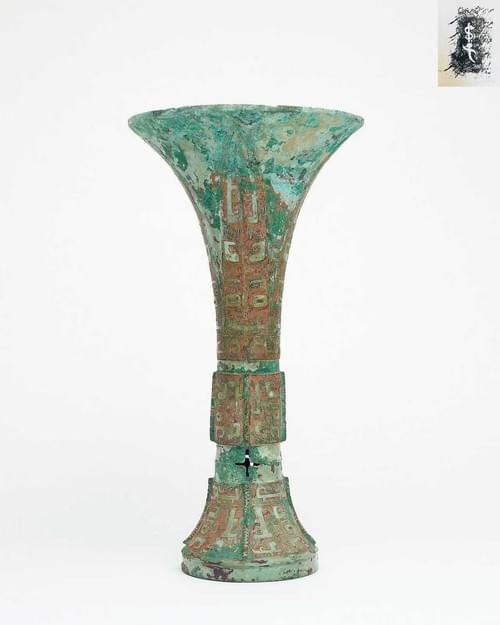
Gu (青銅饕餮蕉葉紋「弔子」觚)
Late Shang Dynasty, 13th century BC
Inscription: 弔子
Height: 28cm
Provenance:
Sotheby's London, December 12, 1989, Lot 22.
Mr. Stevens, Sydney
This Gu beaker, with its elegant trumpet form, slender neck, and refined ornamentation, exemplifies late Shang bronze artistry. Decorated with plantain-leaf motifs on the neck, taotie masks on the waist, and two cruciform apertures between the waist and foot, the vessel displays fine leiwen patterns and traces of cinnabar. Its vivid green patina and well-preserved relief decoration mark it as an outstanding example of late Anyang ritual bronzes, characterized by tall proportions and raised flanges. The inscription “弔子 (Diaozi)” inside the foot likely denotes the maker or owner. In bronze script, “弔” was often used interchangeably with “叔,” possibly derived from “繳,” referring to a corded arrow, and later borrowed as a masculine term of address. “子” indicates a clan leader, a title widely used in Shang inscriptions to signify lineage and status.
Inscription: 弔子
Height: 28cm
Provenance:
Sotheby's London, December 12, 1989, Lot 22.
Mr. Stevens, Sydney
This Gu beaker, with its elegant trumpet form, slender neck, and refined ornamentation, exemplifies late Shang bronze artistry. Decorated with plantain-leaf motifs on the neck, taotie masks on the waist, and two cruciform apertures between the waist and foot, the vessel displays fine leiwen patterns and traces of cinnabar. Its vivid green patina and well-preserved relief decoration mark it as an outstanding example of late Anyang ritual bronzes, characterized by tall proportions and raised flanges. The inscription “弔子 (Diaozi)” inside the foot likely denotes the maker or owner. In bronze script, “弔” was often used interchangeably with “叔,” possibly derived from “繳,” referring to a corded arrow, and later borrowed as a masculine term of address. “子” indicates a clan leader, a title widely used in Shang inscriptions to signify lineage and status.


